
Charging payment Study 2026
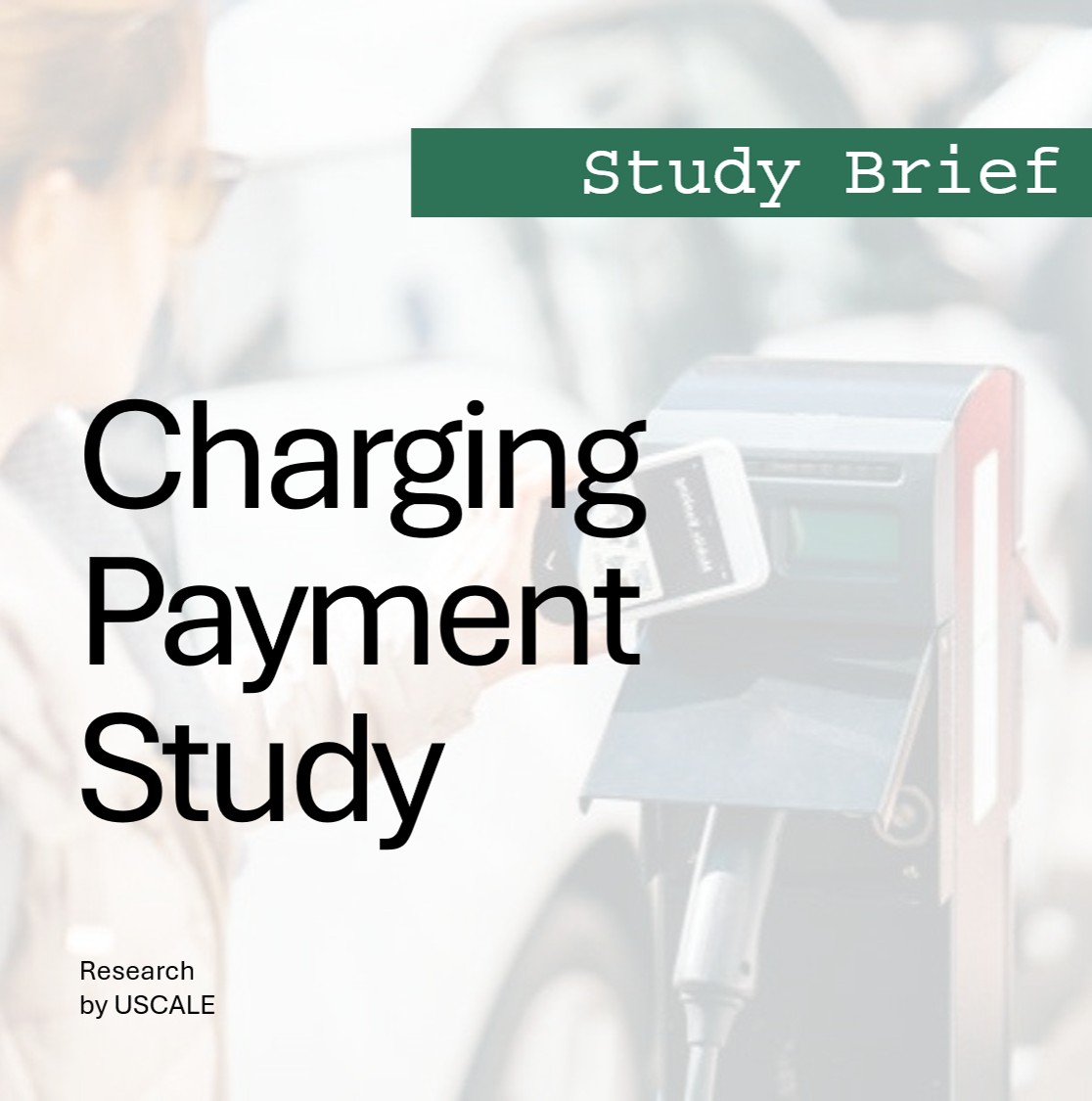
Open loop or closed loop: how drivers pay at charging stations, and whether they would switch or pay extra
The study looks at how EV drivers experience different payment methods, which ones they prefer, and how payment method interacts with other factors such as willingness to pay.
The four most important payment methods were examined
- Charging app
- Charging card / RFID chip
- Plug & Charge / Autocharge
- and various implementation variants for direct payment (ad hoc)
Other key areas of the study:
- Correlation between price and payment method
- Deep dive into barriers to use for Plug & Charge
- Interest in other innovative payment methods
- Expectations regarding receipt generation, charging history and invoicing
The study shows providers which drivers are open to which payment methods, and which arguments win them over.
CONTENTS AND ADDED VALUE OF THE Charging Payment STUDY
Contents of the Charging Payment Study
Segmentation characteristics:
- Socio-demographic data (age, gender, income)
- Living situation (town size, type of house)
- Driving habits (car brand, company car (including coverage of charging costs and fleet size), mileage per year and per weekday)
- Charging locations, charging routine, preferred charging services, charging station search
- Payment behavior in retail and online purchases, bonus programes used
Closed-loop payment methods:
- Satisfaction (overall payment experience, ease of use when paying, variety of payment methods offered, price transparency before charging, invoicing, receipt generation)
- Perception of closed-loop payment methods (Plug & Charge / AutoCharge, charging card/chip, charging app) vs. direct payment without registration
- Payment method usage behaviour (current usage, previously used, never used)
- Detailed evaluation of all payment methods in terms of
- Operation
- Convenience
- Reliability
- Availability
- Cost control
- Prices
- Price transparency
- Perceived loyalty
- Preferred payment method
- Criteria for choosing the preferred payment method
Deep dive into Plug & Charge:
- Awareness of PnC, PnC capability of own vehicle, PnC contract included in purchase, PnC activated in own vehicle
- Evaluation of PnC setup and activation
- Relevance of PnC for next car purchase and decision for charging service
- Reasons for low PnC usage
Open-loop payment methods:
- Perception of open-loop payment methods (contactless credit/debit/giro card, smartphone & payment app, credit/debit/giro card & PIN pad, smartphone & QR code, smartphone on mobile phone bill)
- Usage behaviour of open-loop payment methods (current usage, previously used, never used)
- Detailed assessment of all open-loop payment methods with regard to
- Operation
- Convenience
- Reliability
- Availability
- Cost control
- Prices
- Price transparency
- Perceived loyalty
- Criteria for choosing the preferred payment method
- Preference for price displays
Deep dive pre-authorization:
- Awareness pre-authorization
- Acceptable reserved amount
- Expected time for release of reserved amount after charging is complete
Relationship between payment method and willingness to pay (CONJOINT):
- Conjoint characteristics:
- Price (€0.60–0.67 per kWh in €0.01 increments)
- Means of payment (credit/debit card, PayPal, Google/Apple Pay)
- Payment method (Plug & Charge, charging card, charging app, direct payment)
- General attention to price differences
Innovative payment methods:
- Digital charging card:
- Awareness
- Perceived added value
- Perceived benefits (even with limited use)
- Need for a physical charging card with digital charging card
- Preferred storage location for digital charging card
- Multi-contract function in the head unit:
- Perception of multi-contract function for direct payment
- Perceived advantages of multi-contract function
- Charging from the navigation app:
- Perception of charging from the navigation app
- Perceived advantages of charging from the navigation app
Receipts / Charging history / Invoices:
- Relevance of receipt, charging history, invoice
- Preferred format for receipt, charging history, invoice
- Reasons for requiring receipt, charging history, invoice
Target group of the survey
We recruited only EV owners and drivers who charge in public.
Dashboard for analysis
Many exciting insights only become apparent when the results are evaluated separately for important customer groups. This allows providers to tailor their offerings to different user segments. Thanks to the large sample size, subscribers to the study can split the results as they wish in the interactive dashboard and analyse them in detail.
USCALE multi-client studies: User studies on electromobility
Since 2018, USCALE has surveyed EV drivers about their expectations and experiences at every touchpoint of the customer journey. See all USCALE multi-client studies here. For a summary of our charging research, see Charging Consumer Behavior and Perceptions.
We publish excerpts from our studies in LinkedIn posts by USCALE and our founder, Axel Sprenger.
Questions? Write to contact@uscale.digital.
Let’s talk about your questions
Do you want to know how your charging customers decide? Do you need data on location, tariff or charging offer? Or are you planning your own survey on charging?
Get in touch. We’ll tell you which study already answers your question and what else we can survey for you.
* Mandatory fields